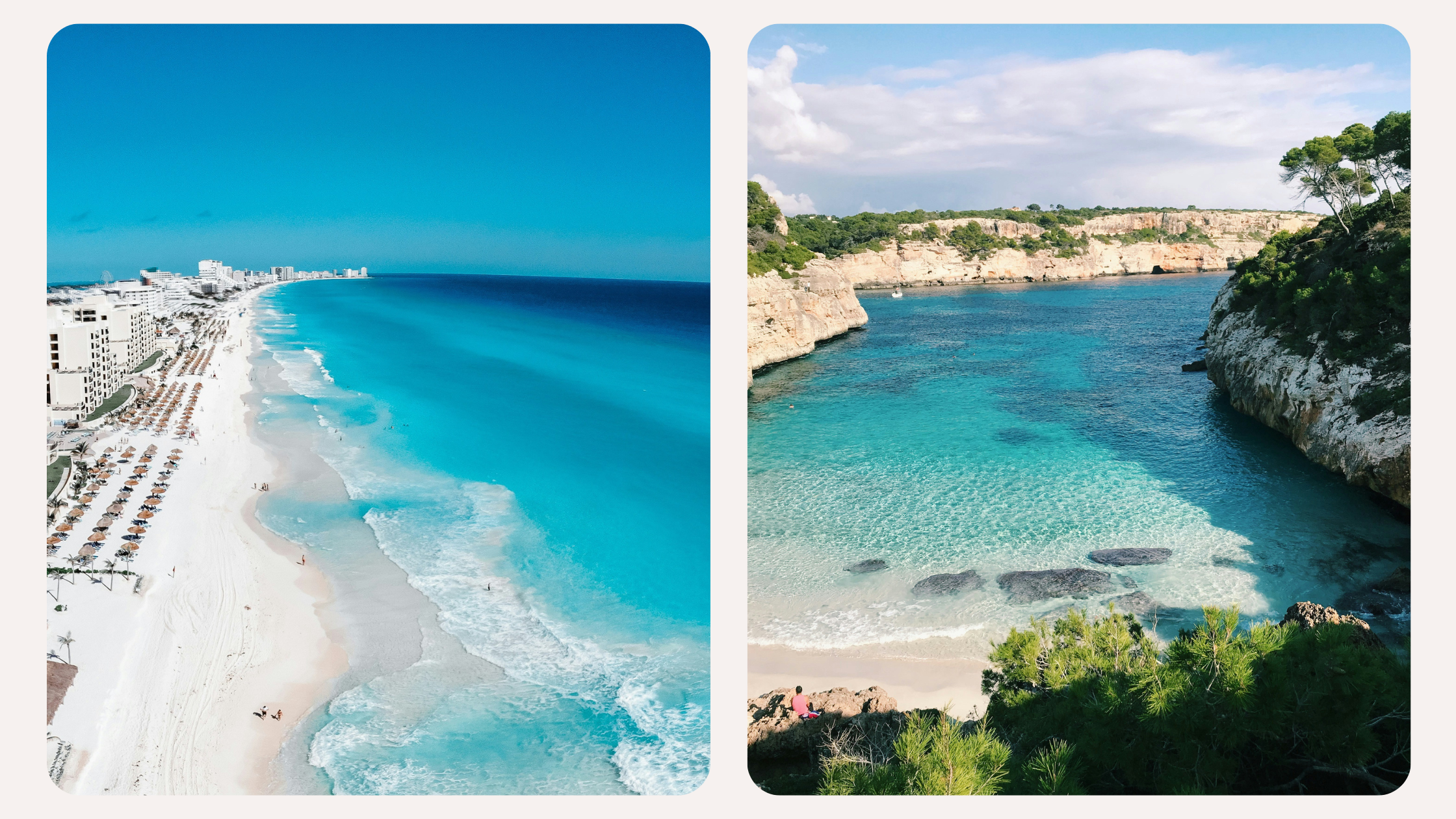
Tulum and Spain keep appearing on the same shortlists. Both offer luxury villas, beach clubs, private chefs, and the kind of backdrop that photographs beautifully. Both are genuinely compelling options for a high-end bachelorette group.
But they are not the same experience. And if you’re deciding between them, the differences are worth understanding before anything gets booked.
The vibe: bohemian eco-luxury vs. European sophistication
Tulum’s identity is built around a specific aesthetic — jungle, cenotes, natural textures, an eco-conscious sensibility wrapped in luxury. It’s beautiful, distinctive, and very much its own thing. The best venues have a raw, editorial quality that photographs extraordinarily well.
Spain — Ibiza, Marbella, Mallorca, Barcelona — operates on a different register. The luxury here is architectural, culinary, and experiential. Clifftop villas above the Mediterranean, Michelin-starred restaurants, beach clubs with serious wine lists and equally serious food. It’s more polished, more varied, and carries a cultural weight that Tulum doesn’t have.
Neither is objectively better. But they attract different groups. The question is which one matches the energy of yours.
The weather window
This matters more than most people factor in at the planning stage.
Tulum’s ideal window is December through April. Outside of that, you’re in hurricane season — June through November carries real risk of disruption, and the humidity in summer is significant. For a group travelling from the US, a June, July, or August trip to Tulum is a gamble with the weather.
Spain’s window is the opposite. May through October is reliably excellent — warm, dry, and predictable. July and August are peak season for a reason: the Mediterranean at its best, beach clubs in full swing, and an energy across the island destinations that is hard to replicate at any other time of year.
If the dates are flexible, this alone can resolve the decision.
The villa experience
Both destinations have exceptional private villa stock. The differences are in character.
Tulum’s villas tend to be more boutique — beachfront properties with natural materials, jungle surroundings, and a design aesthetic that feels curated and intimate. The best ones are genuinely spectacular, but the inventory is smaller and the most coveted properties book out early.
Spain’s villa market — particularly in Ibiza and Mallorca — offers more variety at the high end. Larger properties, more architectural diversity, and a concierge infrastructure that is more developed. Private chefs, in-villa spa services, dedicated drivers — all of this is easier to coordinate in Spain simply because the market for it is more mature.
Getting there from the US
Tulum’s nearest international airport is Cancún, roughly two hours away by road — or closer by helicopter. Direct flights from most major US cities are available, and the journey is relatively straightforward.
Spain requires a transatlantic flight — typically 8 to 10 hours from the East Coast. That’s a longer journey, but for a group doing four or five nights, it’s a different kind of trip from the moment of departure. You arrive somewhere genuinely foreign, with a different language, cuisine, and pace of life. That distance is part of what makes it feel significant.
The food and dining
This is where Spain wins decisively, and it’s worth saying clearly.
Spain’s culinary infrastructure at the luxury level is among the finest in the world. Ibiza has Michelin-starred restaurants. Marbella has some of the best fine dining on the Mediterranean coast. Barcelona is one of the great food cities in Europe. Private chefs in Spain are working with some of the best produce on the continent.
Tulum has a strong restaurant scene — Hartwood, Arca, and several others are genuinely excellent — but the culinary depth and variety that Spain offers, particularly across multiple nights, is in a different category.
The honest verdict
Choose Tulum if: the group wants something that feels immersive and exotic, the dates fall between December and April, and the aesthetic of natural luxury and bohemian atmosphere resonates more than European sophistication.
Choose Spain if: the trip is happening between May and October, the group wants more variety — across destinations, experiences, and dining — and the level of service infrastructure and culinary excellence matters. Also if the idea of the trip is to feel genuinely European, not tropical.
For a group that has done Tulum and wants something different, Spain is the natural next step. For a group deciding for the first time, the dates and the aesthetic usually make the choice obvious.
Either way, the planning complexity at this level is the same: the best villas, restaurants, and experiences in both destinations require early booking, local knowledge, and relationships that take years to build.
That’s what Bach & Joy is for. If Spain is on the shortlist, reach out here and we’ll tell you exactly what’s possible for your dates.
Bach & Joy plans ultra-luxury bachelorette experiences across Spain and Europe. Every detail handled — so the group only has to arrive.