biza and Barcelona appear on the same shortlists regularly — both in Spain, both with exceptional restaurants and luxury infrastructure, both consistently recommended for bachelorette groups arriving from the US. The comparison ends there.
These are fundamentally different experiences. Understanding why makes the choice straightforward for most groups.
The fundamental difference
Ibiza is an island that operates on a specific frequency — one that peaks in summer and has no real equivalent anywhere else in the Mediterranean. The beach clubs, the sunset venues, the energy of July and August, the sense of being at the centre of something that is happening right now — this is what Ibiza does that Barcelona cannot replicate.
Barcelona is one of the great cities in Europe. The architecture is extraordinary and unlike anything else in the world. The gastronomy is at the highest level — four restaurants with three Michelin stars, twenty-nine starred restaurants in total. The neighbourhood culture, the rooftops, the coastal access — all of it operates independently of any season or social scene.
The simplest way to frame it: Ibiza gives the group a feeling. Barcelona gives the group a city.
The beach
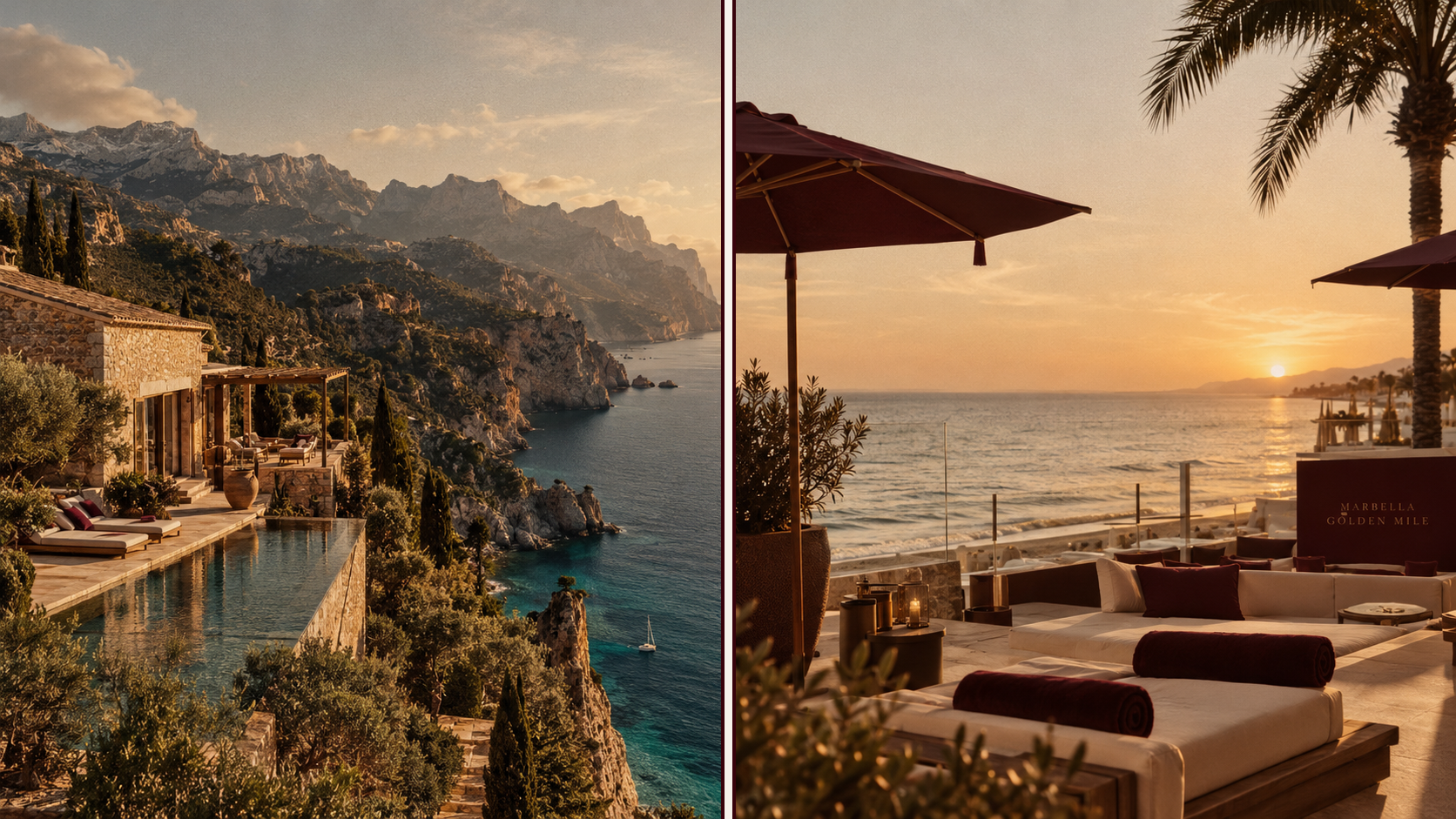
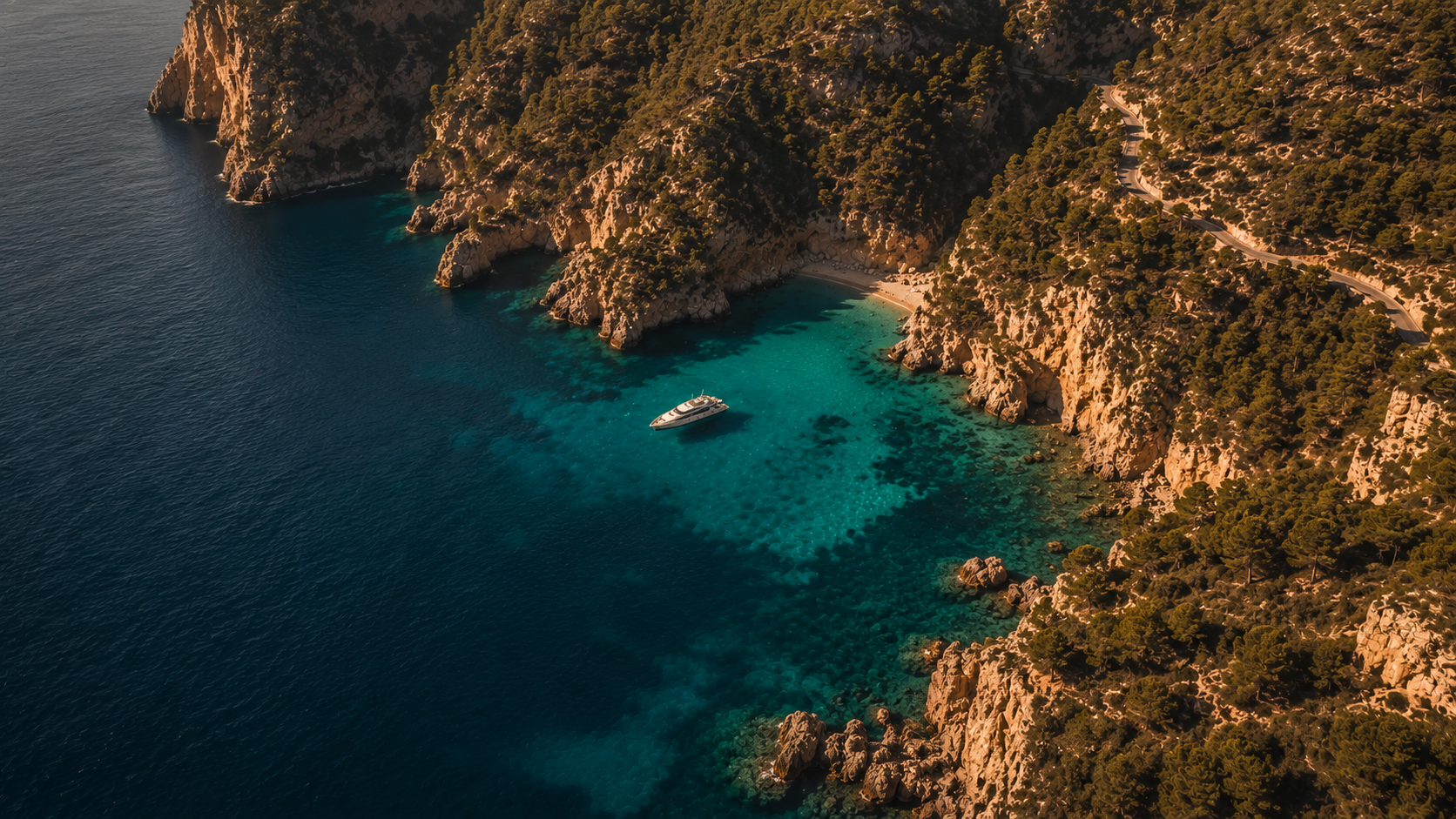
Ibiza’s beach experience is more complete. The beach clubs — Blue Marlin in Cala Jondal, Amante above Sol d’en Serra, Experimental Beach at Las Salinas — are designed around the beach as the centrepiece of the day. The private boat access to hidden coves that are unreachable by road adds a dimension that no urban beach can replicate. The Mediterranean from a clifftop villa in Es Cubells is a view built around the sea in a way that Barcelona’s coastline, for all its qualities, simply isn’t.
Barcelona has beaches — Barceloneta is directly accessible, and the W Hotel’s position on Sant Sebastià beach gives groups staying there immediate coastal access. But the beach is one element of Barcelona rather than the organising principle of the experience, and the water quality along the urban coastline is not comparable to Ibiza’s coves.
Verdict: Ibiza, clearly, for groups where the beach and the sea are central to the trip.
The food
Barcelona wins this category, and it isn’t close. Four three-Michelin-starred restaurants — Disfrutar, currently ranked second in the world, Lasarte, Cocina Hermanos Torres, and ABaC — give Barcelona a gastronomic depth that Ibiza, with its three starred restaurants, cannot match. The wider restaurant scene in Barcelona — the neighbourhood dining in Sant Antoni, the natural wine bars of the Eixample, the market-driven Catalan cooking in the Gothic Quarter — adds layers of culinary experience that an island of Ibiza’s size cannot provide.
Ibiza’s food is excellent — UNIC, Casa Jondal, Es Tragón, Lio — and for a group spending four or five nights, there is more than enough quality across the island. But for a group where the Michelin dinners are the centrepiece of the trip, Barcelona is the stronger choice.
Verdict: Barcelona, for groups where gastronomy is the priority.
The energy
Ibiza in peak season operates at a frequency that is genuinely without equivalent in Europe. The beach clubs building through the afternoon, the transition from the pool to the terrace to dinner to the night — the island has a social energy that Barcelona, for all its vitality, doesn’t replicate.
Barcelona has energy of its own — the city is alive at midnight in a way that most European capitals aren’t, and the Sant Antoni neighbourhood in particular has a creative density that is hard to find anywhere outside the great cities. But it is city energy, not island energy, and the distinction matters for groups choosing between them.
For groups that want to feel the heightened register of peak-season Mediterranean island life, Ibiza. For groups that want the sophisticated, layered energy of one of Europe’s great urban environments, Barcelona.
Verdict: Ibiza for social and island energy. Barcelona for urban sophistication.
The villa
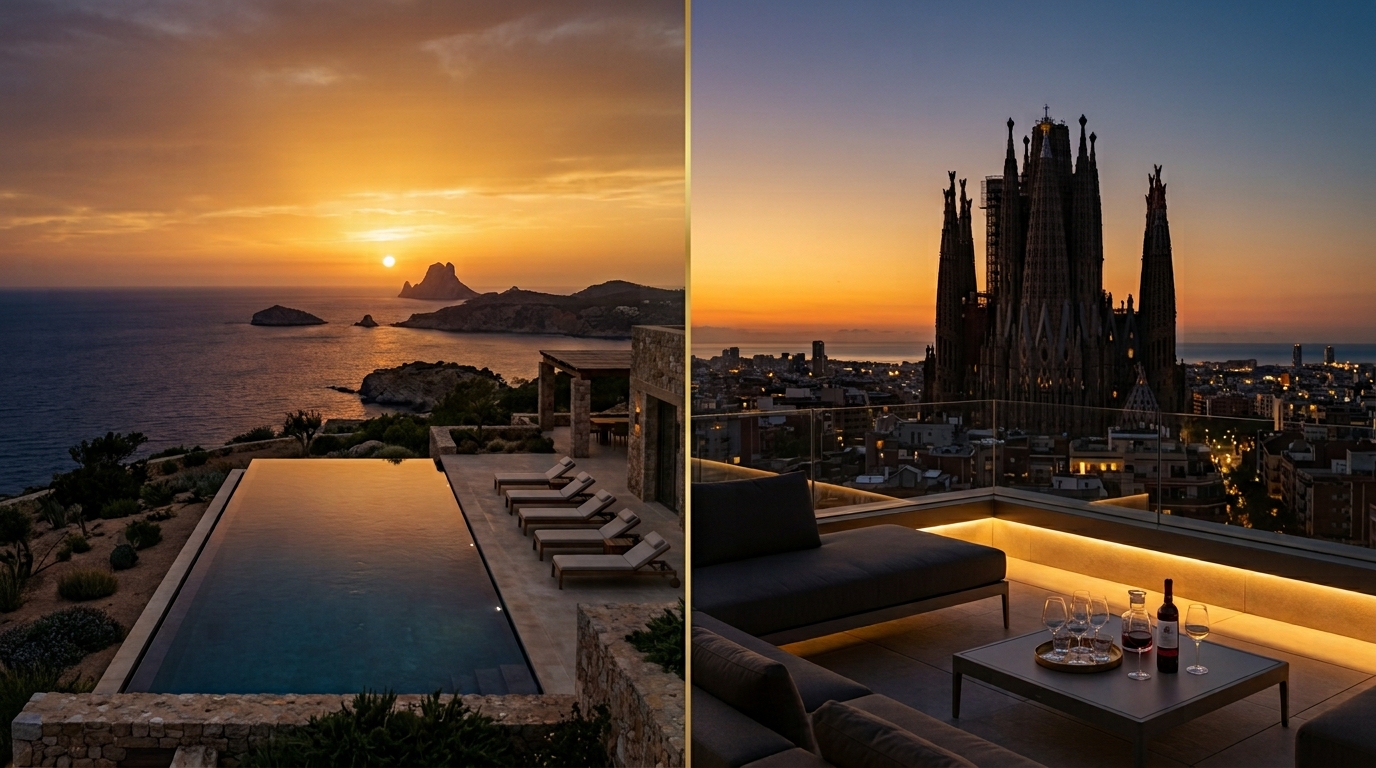
Ibiza’s villa market — particularly in Es Cubells and Cala Jondal — is built around the sea view as the defining feature. The infinity pool above the Mediterranean, the terrace looking toward Formentera at sunset, the clifftop position that puts the group above everything — this is what the finest Ibiza properties offer, and it shapes the entire experience of the trip.
Barcelona’s villa market is less developed. The city works better from a luxury hotel — the Mandarin Oriental on the Passeig de Gràcia, the W Barcelona on the waterfront, the Edition in the Gothic Quarter — than from a private property, because proximity to the city’s restaurants, culture, and neighbourhoods matters more than the private space that a villa provides.
For groups where the villa is the anchor of the trip, Ibiza. For groups where the city is the experience, a hotel in Barcelona is typically the stronger choice.
Verdict: Ibiza for villa-centred trips. Barcelona for hotel-centred city experiences.
The logistics
Barcelona is significantly easier to access from the US. Direct transatlantic flights to Barcelona El Prat from New York, Miami, and other major cities make the arrival simple. The city is compact and navigable — the best restaurants, hotels, and neighbourhoods are within a short transfer of each other.
Ibiza requires a connection through a European hub or a seasonal direct service from certain US cities. The island is small and logistics are straightforward once there, but the journey from the US is a step more complex than Barcelona.
Verdict: Barcelona for logistical simplicity. Ibiza for the island experience that justifies the journey.
The timing
Both destinations have clear peak seasons, but they operate differently.
Ibiza peaks in July and August — this is when the island is at its most alive and when everything requires the most advance planning. June and September are the best shoulder-season options, with the full experience available at slightly less pressure.
Barcelona operates year-round. The restaurant scene doesn’t close, the architecture doesn’t change with the season, and the city’s cultural life is strongest in autumn and spring. The beach dimension peaks in June through September, but the rooftops and the outdoor dining scene extend comfortably into October.
Verdict: Ibiza is at its best in summer. Barcelona works across the year and is excellent in September and October when Ibiza begins to wind down.
Which one is right for your group?
Choose Ibiza if:
- The beach club day is the centrepiece of the trip
- The group wants the energy of the world’s most famous summer island
- A private villa above the Mediterranean is the vision
- The dates are in June, July, August, or September
- The bride has been dreaming of Ibiza specifically
Choose Barcelona if:
- Michelin dinners and gastronomic depth are the priority
- The group wants culture, architecture, and neighbourhood exploration alongside luxury
- A hotel base makes more sense than a villa for the group’s size or preferences
- The dates are in May, September, or October — or the group is flexible on timing
- The group wants a city trip with the Mediterranean as a backdrop rather than an island trip
Consider both if the trip allows it — three nights in Ibiza followed by two nights in Barcelona, or vice versa, produces a trip that captures what each destination does best. The contrast between the two makes each feel more vivid. Bach & Joy designs these split itineraries regularly.
Reach out here and we’ll tell you within 24 hours which structure makes most sense for your group and your dates.